Showing posts with label General Research on the Music Industry.... Show all posts

Thursday, 7 October 2010

Analysis of Digi Pack - Micheal Jackson


 The cardboard sleeve around the outside of the CD cover is in a metallic shine showing how this re- release is imitate 25 years edition. This edition was released for the 'hardcore' fans due to its personal photographs
The main image shows a younger image of  Micheal a pre surgical look. This classic still is from the music video Thriller. As an over look the cover is very bland, there are no stand out colours or fonts. Showing that he is already an established artist and doesn't need to attract new fans.


The title on the front cover is is written with '25' over the top again showing the re-release and the success of the album,with written 'The world's biggest selling album of all time' this shows the consumers popularity of the album.
This picture shows a pre-surgical look of Micheal, with his natural hair. This shows his youthful look, and possibly how he wants his fans to remember him by, this look when he was at the height of his game.
The red sticker attracts the consumer and with the interest of the recent artists makes it more popular with younger generations which appeal to the consumer today.


On the left is an iconic still from the video 'Thriller'. This is an insight into the DVD, and shows the audience a 'tease' of what to expect. This also can encourage the common consumer to buy the digipack. The image is of the focus of him, in the centre of the frame making eye contact to the consumer. Which also encourages the consumer to purchase, as it looks like Micheal himself is looking at the consumer. As he is wearing red and has 'devilish' eyes, this possibly could denote his personality, as this is contrasted in the other image on the right. Here he is dressed in white and is posing with a smile, showing a more lighter side to his personality. The light is also glowing, showing a 'heavenly' contrasted to the 'devilish' image. This again is a posed photo shoot, so this has been created for a CD cover. He is holding a tiger, showing his extravagant personality that the consumer all know and love.


Monday, 27 September 2010

Song BMG Biography....


Sony BMG Music Entertainment was a global recorded music company, which was a 50–50 joint venture between the Sony Corporation of America and Bertelsmann AG. The venture’s successor, the again-active Sony Music Entertainment, is 100% owned by the Sony Corporation of America.
Sony BMG Music Entertainment formed in 2004 when Sony Music Entertainment and Bertelsmann Music Group merged.


Sony BMG Music Entertainment formed in 2004 when Sony Music Entertainment and Bertelsmann Music Group merged.


With his new position Mr. Schmidt-Holtz will have overall management responsibility for the company and be based in New York. Mr. Lack, as Chairman of the Board, will lead the company's public policy and industry , and operating responsibility and oversight for the theatrical film business of Sony BMG, and be based in New York.


The joint venture SONY BMG MUSIC ENTERTAINMENT was formally announced on August 5, 2004. It is 50% owned by Bertelsmann and 50% owned by Sony Corporation of America. It encompasses some of the most influential and successful record labels in the world and a wide variety of recording artists, and operates worldwide. Schmidt-Holtz and Lack were instrumental in joining together to begin the negotiations and ultimately implement the joint venture.

Mr Schmidt - Holtz said...
"I am honored to be asked to lead Sony BMG and to take us forward as a leader in music and entertainment. I know a deep commitment to our artists and our shareholders is shared by our employees worldwide, and by working together we will continue to grow Sony BMG as a creative powerhouse." said Rolf Schmidt-Holtz, CEO, SONY BMG MUSIC ENTERTAINMENT

1. The subsidiary labels that SONY BMG own are one of the Big Four music companies, and includes ownership and distribution of recording labels such as Arista Records, Columbia Records, Epic Records, J Records, Jive Records, RCA Victor Records, RCA Records, Legacy Recordings, Sonic Wave America, and others.
 
2. The music industry is transitioning from a single product model to a different service model licensing, broadcasting, marketing, on-demand services. Bertelsmann sold its stake because it's a traditional, horizontally-integrated media company. Sony bought it because it's a vertically-integrated company well equipped to take advantage of it's inter-divisional synergies. that this is a victory for vertical integration in a period of diversifying revenue opportunities for music.
Bertelsmann is a content and distribution company. Besides the record label, its main holdings are book and magazine publishers and broadcasters. They make money by producing and distributing information, which is eventually paid for by advertisers and shoppers.
 
3.Sony profits from its money manufacturing consumer electronics, producing films, and licensing its formats e.g. Blu-ray, Playstation, and even owns some retail. Even though the company does profit from recorded music, its music division can be an asset for the company. This is because the music can be licensed on friendly terms to Sony's movies, games, and distribution portals, and can be used to support new technology formats.

Wayne Isham - Music Video Director.

Wayne Isham born 1958 is an American music video director who has directed music videos of many popular artists; such as, Kelly Clarkson, *NSYNC, Sheryl Crow,Madonna, Avril Lavigne, Bon Jovi and many others.
Waynes signature trade marks are Nested Zooms and Technocranes. Waynes personal quotes; 'No Wayne, no pain!'

Watching these videos in class we found a repeated theme of all videos resembling a performance element, on stage and to an audience.
For each genre with a similar audience showed familiar scene and atmosphere. For example Bon Jovi's videos 'You gave love a bad name' and 'Living on a Prayer' showed intimate 'backstage' setting followed with a performance to the crowd in an arena. Showing Waynes unique style and 'stamp' on music videos.

Watching Wayne's videos made me analyse his style and critique his videos. From the mise-en- scene down to extras all followed suit with the genre of music. In Enrique's video for ' I Like it' and Ricky Martin's video 'She Bangs' which attract similar audiences both show party scenes, sexuality, SFX and Pop influenced. Showing that these are factor which audiences of this genre are attracted to.


Tuesday, 21 September 2010

Rough Trade Records

File:Rough Trade logo.svg
Rough Trade Records is an independent record label based in London, United Kingdom. It was started in 1978 by Geoff Travis. Geoff Travis was traveling in North America and amassed a huge record collection as he moved from coast to coast, He then shipped these records back to the UK which became the basis of the Rough Trade Shop. The label grew out of the Rough Trade Shop, founded by Travis in west London in 1976. The Label was set up in 1978 and also went into the distribution business. Distributing amongst others "Joey Parratts" first band The Flying Brix. It became independent from the shop in 1982, then went bankrupt in 1991, ruining quite a few smaller record labels to which money was owed. Rough Trade was relaunched in 2000.

Rough Trade specialised primarily in European post-punk and other alternative rock of the late 1970s and early 1980s. In the late 1980s Rough Trade branched out by issuing an eponymous album by Lucinda Williams. Other early signings included Agitpop, The Raincoats, Young Marble Giants, The Smiths and Scritti Politti.

Monday, 20 September 2010

Madonna - Queen of Pop

Sunday, 5 September 2010

Conventions of Music Videos...

  • Establishing shot to set the mood or scene for the video, EG narrative or genre
  • Mise en scene establishing where it is set / mood for the video
  • Editing usually follows the tempo or beat of the song
  • Certain props an usually resemble lyrics
  • Narrative starts to unravel, story as well as a performance
  • 'Acting' reflects the lyrics
  • Montage editing
  • Camera shot can reflect the genre
  • Close ups of the artist or band

General Research

What is a Music Video?

A music video is a short film or video that accompanies a complete piece of music/song. Modern music videos are primarily made and used as a marketing device intended to promote the sale of music recordings. ...

The first type of music video originated in 1894, which was a type of illustrated song. A set of images were drawn by artists to accompany the song, to depict more of a meaning.
With the influence of film technology called the 'Talkies' this allowed music videos to become more advanced, hence being called 'Soundies'. As they developed in the 1940's they were called 'Promotional clips' mostly used by jazz musicians but also a showcase for comedians and dancers.

The revolutionized music video

The Beatles was one of the first acts to use the music video as a promotional and story teller tool! Still in the format of black and white, following 'talkie' conventions 'A Hard Days Night' was presented as a mock documentary.
There second feature 'Help' was shot in black and white in international locations. It featured a recurring conventions of today's music videos, like close ups, contrasting camera angles and shots. And were the first of this type. The Beatles, began making these promotional clips for distributions globally. This also helped the commuting in places where they could to be in person.


The Beginning of Music Television...

British screens started to view music videos, with the introduction of the long running show 'Top of the Pops' started to show them in the late 1970's, but however where filtered with the more 'dairing' videos.
However in 1981 an American channel was dawning a 24 hour music video channel called MTV, this led by the 1980's music videos would become integral to promote popular music.  


In 1983, the most successful and influential music video of all time was released for Michael Jackson's song "Thriller". The video set new standards for production, having cost $500,000 to film, this set new heights for music videos.

Andrew Goodwin’s Theory

Andrew Goodwin has identified a number of key features which distinguish the music video as a form:

There is a relationship between the lyrics and the visuals, with the visuals illustrating,amplifying or contradicting the lyrics.There is a relationship between the music and the visuals, with the visuals illustrating,
amplifying or contradicting the music.Genres are complex and diverse in terms of music video style and iconography. Record companies will demand a lot of close-ups of the main artist or vocalist. Voyeurism is present in many music videos, especially in the treatment of females, but also in terms of systems of looking. Some examples are screens within screens,cameras, mirrors, etc. There are likely to be inter textual references, either to other music videos or to films and TV texts, these provide further gratification and pleasure for the viewers/fans.

This theory was presented in his book Dancing in The Distraction Factory.


 Doing some research on Andrew Goodwin i found this presentation on slide share outlining his theory in detail and making it easy to understand! 

Adorno and Horkeimer...

  • They were sociologists and philosophers.
  • They argued through film, radio and magazines can manipulate the masses into passivity.
  • Easy consumption make people docile and content.
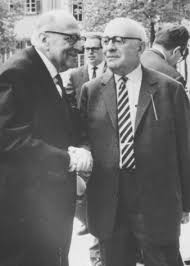
The theory states that culture not only mirrors society, but also takes an important role in shaping society through the processes of standardisation and commodification, creating objects rather than subjects. The culture industry claims to serve the consumers' needs for entertainment, and is delivering what the consumer wants. "The standardised forms, it is claimed, were originally derived from the needs of the consumers: that is why they are accepted with so little resistance. In reality, a cycle of manipulation and retroactive need is unifying the system ever more tightly". By meeting these needs, the industry is manipulating the consumers to desire what it produces. The outcome is that mass production feeds a mass market that minimises the identity and tastes of the individual consumers.

The culture industry claims to serve the consumers needs for entertaining. The culture mirrors society and categorises into height, middle or low brow. This applies to the music industry and video. Due to the capitalism and materialism/ money.

Here is a video to explain this theory;

Thursday, 2 September 2010

Case Study.....Beyonce'


One artist who i admire most would be Beyonce Knowles, from here amazing group career with Destiny's Child to and even better career with her solo material. She has been in the music industry from the age of 15 years old, and certainly made an impact becoming one of the biggest super stars of the 21st century.
Her string of music videos, always attract huge audiences and are big hit in the charts, from teaming up with Lady Gaga and Jay Z....
Here's an insight into Beyonce herself.....

BeyoncĂ© Giselle Knowles was born September 4, 1981, The American R&B and pop recording artist, actress and fashion model. Born and raised in Houston. Beyonce' rose to fame in the late 1990s as the lead singer of the R&B girl group Destiny's Child, one of the world's best-selling girl groups of all time.
During Destiny's Child, Beyonce' released her debut solo album Dangerously in Love in 2003,which became one of the most successful albums of that year, earning her a then record-tying five Grammy Awards.
Beyonce has sold over 11.2 million albums and nearly 25 million singles in the United States.According to Sony, her total album and single sales, when combined with the group, have surpassed 100 million. On December 11, 2009, Billboard listed Knowles as the most successful female artist of the 2000s decade and the top Radio Artist of the decade.In February 2010, the RIAA listed her as the top certified artist of the decade. In 2010, VH1 listed Knowles at number 52 on its list of the 100 Greatest Artists of All Time.

My favourite Beyonce' music video.....


I enjoyed this video because the amazing dance routine that became a hit with certain celebrities trying to imitate the dance! And also how simple it was to make but how interesting it is to watch.