Monday, 20 September 2010
Analysis of Music Video - My Lovin En Vogue
En Vogue is an American female R&B vocal group from Oakland, California. The group has won more MTV Video Music Awards than any other female group in MTV history, a total of seven, along with four Soul Train Awards, six American Music Awards, and seven Grammy nominations.
The video begins with the flashing's of the band, in a 60's style. With backed up hair and silver dresses, this shows their classy look for a older girl group.
The music here demonstrates the genre by the pop, hip hop mix. There are many characteristics of the pop genre, with repetitive dance routines and provocative close ups. Which show the bands sex appeal.
There isn't a strong a relationship between lyrics and visuals. As the video takes place in a studio with limited lighting, and background. Simply just a plain blue and white background. Showing the emphasise possibly on them. The close ups of the solo singer, are very promiscuous, with her being scantily dresses and singing to the camera. This shows strong sexual appeal to the audience.
The overall look of the video has a strong mature look, which contrasts many 'poppy' acts around at that time.

Sunday, 5 September 2010
Conventions of Music Videos...
- Establishing shot to set the mood or scene for the video, EG narrative or genre
- Mise en scene establishing where it is set / mood for the video
- Editing usually follows the tempo or beat of the song
- Certain props an usually resemble lyrics
- Narrative starts to unravel, story as well as a performance
- 'Acting' reflects the lyrics
- Montage editing
- Camera shot can reflect the genre
- Close ups of the artist or band
General Research
What is a Music Video?
A music video is a short film or video that accompanies a complete piece of music/song. Modern music videos are primarily made and used as a marketing device intended to promote the sale of music recordings. ...
The first type of music video originated in 1894, which was a type of illustrated song. A set of images were drawn by artists to accompany the song, to depict more of a meaning.
With the influence of film technology called the 'Talkies' this allowed music videos to become more advanced, hence being called 'Soundies'. As they developed in the 1940's they were called 'Promotional clips' mostly used by jazz musicians but also a showcase for comedians and dancers.
The revolutionized music video
The Beatles was one of the first acts to use the music video as a promotional and story teller tool! Still in the format of black and white, following 'talkie' conventions 'A Hard Days Night' was presented as a mock documentary.
There second feature 'Help' was shot in black and white in international locations. It featured a recurring conventions of today's music videos, like close ups, contrasting camera angles and shots. And were the first of this type. The Beatles, began making these promotional clips for distributions globally. This also helped the commuting in places where they could to be in person.
The Beginning of Music Television...
British screens started to view music videos, with the introduction of the long running show 'Top of the Pops' started to show them in the late 1970's, but however where filtered with the more 'dairing' videos.
However in 1981 an American channel was dawning a 24 hour music video channel called MTV, this led by the 1980's music videos would become integral to promote popular music.
In 1983, the most successful and influential music video of all time was released for Michael Jackson's song "Thriller". The video set new standards for production, having cost $500,000 to film, this set new heights for music videos.
A music video is a short film or video that accompanies a complete piece of music/song. Modern music videos are primarily made and used as a marketing device intended to promote the sale of music recordings. ...
The first type of music video originated in 1894, which was a type of illustrated song. A set of images were drawn by artists to accompany the song, to depict more of a meaning.
With the influence of film technology called the 'Talkies' this allowed music videos to become more advanced, hence being called 'Soundies'. As they developed in the 1940's they were called 'Promotional clips' mostly used by jazz musicians but also a showcase for comedians and dancers.
The revolutionized music video
The Beatles was one of the first acts to use the music video as a promotional and story teller tool! Still in the format of black and white, following 'talkie' conventions 'A Hard Days Night' was presented as a mock documentary.
There second feature 'Help' was shot in black and white in international locations. It featured a recurring conventions of today's music videos, like close ups, contrasting camera angles and shots. And were the first of this type. The Beatles, began making these promotional clips for distributions globally. This also helped the commuting in places where they could to be in person.
The Beginning of Music Television...
British screens started to view music videos, with the introduction of the long running show 'Top of the Pops' started to show them in the late 1970's, but however where filtered with the more 'dairing' videos.
However in 1981 an American channel was dawning a 24 hour music video channel called MTV, this led by the 1980's music videos would become integral to promote popular music.
In 1983, the most successful and influential music video of all time was released for Michael Jackson's song "Thriller". The video set new standards for production, having cost $500,000 to film, this set new heights for music videos.
General Research...
Since cinema was invented it created the abilility to birng songs and music to life. Advances in technololgy have tranformed the music video into what it is today.
The early years...
Music videos since 1920's many jazz musicans such as Bessie Smith to accompany popular films.
Bob Dylan
1965 - Bob Dylan - Subterranean Homesick Blues was credited as one of the first modern music videos.
Pop Music...
Pop music TV shows, 1970 TV's great oppourtunity to promote their artists. They focus on producing short 'promos' early music video which started to replace the live performance of the artistson the TV stage.
Bohemian Rhapsody...
1975 - Bohemian Rhapsody - Groundbreaking by Queen, marked the beginning of the videomusic era and set the language for the modernmusic video. First to use advanced visual effects.
Technical Codes...
Camerawork - as with any moving image text. how the camera is used and how images are sequenced will have signicant imapct upon meaning.
Camera movement, angle and shot distance all need to be analysed. Camera movement may accompany movement of performers walking, dancing. But it may also be used to create a more dynamic feel to stage performance by for instance constantly circling the band as they perform on stage.
The close up does predominate as in most TV partley because of the size of the screen and partly because of the desire to create and a sense of intimacy for the viewer.
It emphasizes half of the commodity on sale but not just the song,but the artists and particulary the voice.
Editing...
Through the most common form of editing associated with the muic promo is fast cut montage,rendering many of the images impossible to grasp on first viewing thus ensuring multiple, viewing, there are videos which use slow pace and gentler transistions to establish mood.
This is particualrly apparent for the work of many female solo artists with a broad audience appeal such as dido.
Often enhancing the editing are digital effects which play witht the original images to offer different kinds of pleasure for the audience, split screens,colourisation, CGI.
-Fast cut montage
-Multiple viewing
-spilt commanly used
- 35 MM film
The early years...
Music videos since 1920's many jazz musicans such as Bessie Smith to accompany popular films.
Bob Dylan
1965 - Bob Dylan - Subterranean Homesick Blues was credited as one of the first modern music videos.
Pop Music...
Pop music TV shows, 1970 TV's great oppourtunity to promote their artists. They focus on producing short 'promos' early music video which started to replace the live performance of the artistson the TV stage.
Bohemian Rhapsody...
1975 - Bohemian Rhapsody - Groundbreaking by Queen, marked the beginning of the videomusic era and set the language for the modernmusic video. First to use advanced visual effects.
Technical Codes...
Camerawork - as with any moving image text. how the camera is used and how images are sequenced will have signicant imapct upon meaning.
Camera movement, angle and shot distance all need to be analysed. Camera movement may accompany movement of performers walking, dancing. But it may also be used to create a more dynamic feel to stage performance by for instance constantly circling the band as they perform on stage.
The close up does predominate as in most TV partley because of the size of the screen and partly because of the desire to create and a sense of intimacy for the viewer.
It emphasizes half of the commodity on sale but not just the song,but the artists and particulary the voice.
Editing...
Through the most common form of editing associated with the muic promo is fast cut montage,rendering many of the images impossible to grasp on first viewing thus ensuring multiple, viewing, there are videos which use slow pace and gentler transistions to establish mood.
This is particualrly apparent for the work of many female solo artists with a broad audience appeal such as dido.
Often enhancing the editing are digital effects which play witht the original images to offer different kinds of pleasure for the audience, split screens,colourisation, CGI.
-Fast cut montage
-Multiple viewing
-spilt commanly used
- 35 MM film
Andrew Goodwin’s Theory
Andrew Goodwin has identified a number of key features which distinguish the music video as a form:
There is a relationship between the lyrics and the visuals, with the visuals illustrating,amplifying or contradicting the lyrics.There is a relationship between the music and the visuals, with the visuals illustrating,
 amplifying or contradicting the music.Genres are complex and diverse in terms of music video style and iconography. Record companies will demand a lot of close-ups of the main artist or vocalist. Voyeurism is present in many music videos, especially in the treatment of females, but also in terms of systems of looking. Some examples are screens within screens,cameras, mirrors, etc. There are likely to be inter textual references, either to other music videos or to films and TV texts, these provide further gratification and pleasure for the viewers/fans.
This theory was presented in his book Dancing in The Distraction Factory.
Doing some research on Andrew Goodwin i found this presentation on slide share outlining his theory in detail and making it easy to understand!

Adorno and Horkeimer...
They were sociologists and philosophers.
- They argued through film, radio and magazines can manipulate the masses into passivity.
- Easy consumption make people docile and content.
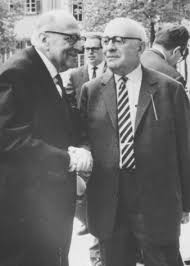
The theory states that culture not only mirrors society, but also takes an important role in shaping society through the processes of standardisation and commodification, creating objects rather than subjects. The culture industry claims to serve the consumers' needs for entertainment, and is delivering what the consumer wants. "The standardised forms, it is claimed, were originally derived from the needs of the consumers: that is why they are accepted with so little resistance. In reality, a cycle of manipulation and retroactive need is unifying the system ever more tightly". By meeting these needs, the industry is manipulating the consumers to desire what it produces. The outcome is that mass production feeds a mass market that minimises the identity and tastes of the individual consumers.
The culture industry claims to serve the consumers needs for entertaining. The culture mirrors society and categorises into height, middle or low brow. This applies to the music industry and video. Due to the capitalism and materialism/ money.
Here is a video to explain this theory;
Thursday, 2 September 2010
Case Study.....Beyonce'

One artist who i admire most would be Beyonce Knowles, from here amazing group career with Destiny's Child to and even better career with her solo material. She has been in the music industry from the age of 15 years old, and certainly made an impact becoming one of the biggest super stars of the 21st century.
Her string of music videos, always attract huge audiences and are big hit in the charts, from teaming up with Lady Gaga and Jay Z....
Here's an insight into Beyonce herself.....
Beyoncé Giselle Knowles was born September 4, 1981, The American R&B and pop recording artist, actress and fashion model. Born and raised in Houston. Beyonce' rose to fame in the late 1990s as the lead singer of the R&B girl group Destiny's Child, one of the world's best-selling girl groups of all time.
During Destiny's Child, Beyonce' released her debut solo album Dangerously in Love in 2003,which became one of the most successful albums of that year, earning her a then record-tying five Grammy Awards.
Beyonce has sold over 11.2 million albums and nearly 25 million singles in the United States.According to Sony, her total album and single sales, when combined with the group, have surpassed 100 million. On December 11, 2009, Billboard listed Knowles as the most successful female artist of the 2000s decade and the top Radio Artist of the decade.In February 2010, the RIAA listed her as the top certified artist of the decade. In 2010, VH1 listed Knowles at number 52 on its list of the 100 Greatest Artists of All Time.
My favourite Beyonce' music video.....
I enjoyed this video because the amazing dance routine that became a hit with certain celebrities trying to imitate the dance! And also how simple it was to make but how interesting it is to watch.
Subscribe to:
Posts (Atom)